


Gender Representation in Middle School Second Generation EFL Textbooks: A Critical Discourse Analysis of third year English textbook
General Information:
Level |
Master |
Title |
Gender Representation in Middle School Second Generation EFL Textbooks: A Critical Discourse Analysis of third year English textbook |
Specialty |
Linguistics |
Cover Page:
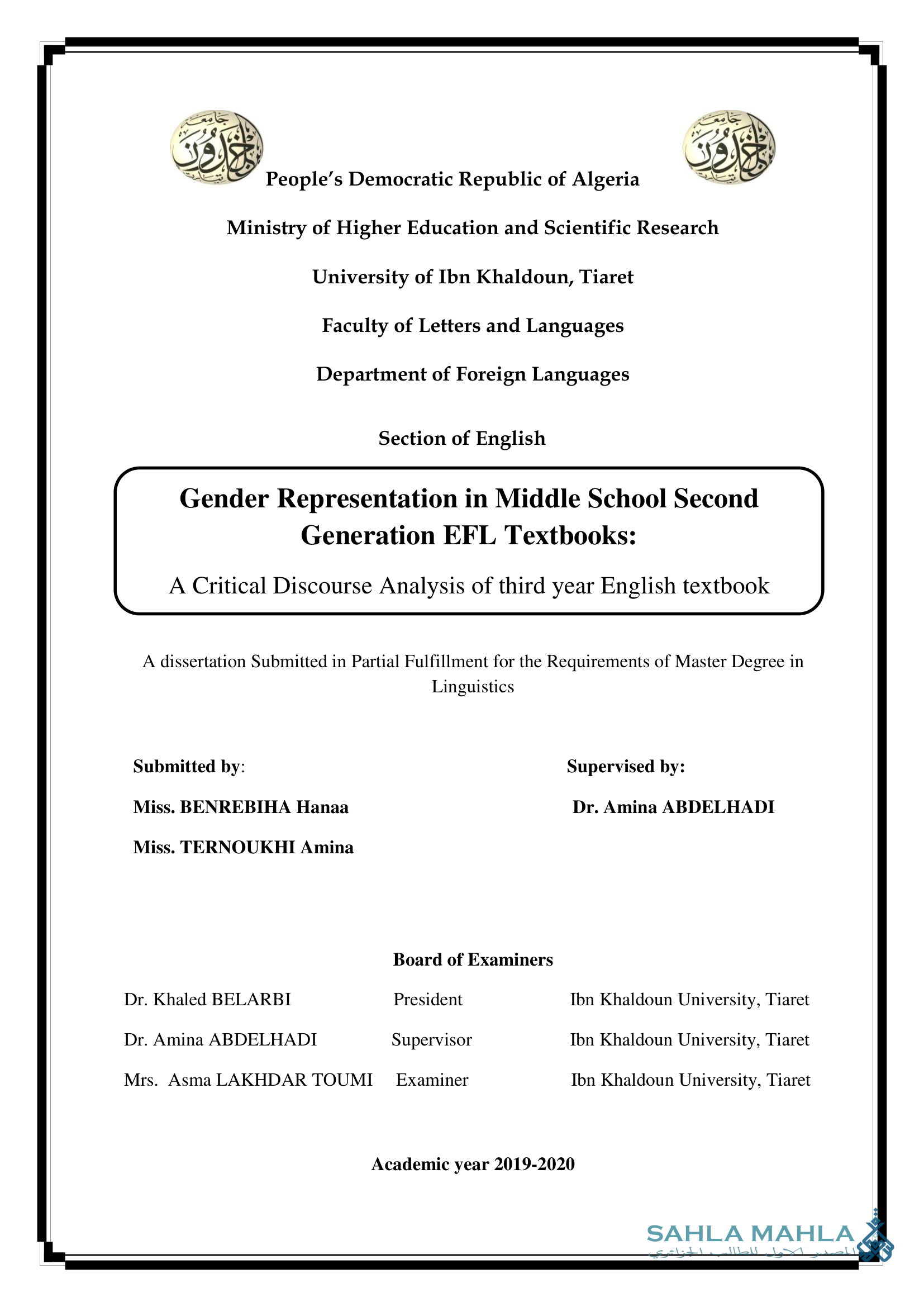
Outline:
Acknowledgment
General Introduction
1. Chapter One: Literature Review
1.1. Introduction
1.2. Sex and Gender
1.2.1. Gender Equality
1.2.2. Gender Equity
1.2.3. Empowerment
1.3. Gender Stereotype
1.4. Gender Role socialization
1.4.1. Theories of Gender Role Socialization.
1.4.2. Agents of socialization
1.5. Early Work on Gender and Language
1.5.1. Sexism in Language
1.6.Gender Identity in Discourse
1.7.Gender equality in the educational field and learning materials
1.7.1. Gender in EFL Textbooks
1.7.2. Textbooks as Agents for Social Change
1.7.3. Gender bias in EFL Textbooks
1.8. Critical discourse analysis
1.8.1. Ideology in discourse
1.8.2. Power and discourse
1.8.3. Representation
1.9. Conclusion
2. Chapter Two: Research Methodology
2.1. Introduction.
2.2. Sample and Methodological Approach
2.2.1. Description of the Sample
2.2.2. Methodological Approach of the Study
2.3. Van Leeuwen ‘s Analytical Framework
2.4. Content Analysis
2.5. Gender marked linguistic items in EFL textbooks
2.6. Data needed
2.6.1. The importance of reading passages
2.6.2. The importance of dialogues
2.6.3. Historical figures assuming protagonists’ roles or being mentioned
2.7.Research ethics
1.8. Conclusion
Chapter Three: Data Analysis and Interpretation
3.1. Introduction
3.2. Description of the Target Textbook ‘My Book of English’
3.2.1. “My Book of English” Structure
3.2.2. My Book of English Covers ‘front and back photos’
3.2.3. “My Book of English” Content
3.2.4. “My Book of English” Sequences
3.3. Culture in the Linguistic and Visual Components
3.4. Data Analysis
3.4.1. Van Leeuwen Inventory
3.4.2.Frequency of occurrence
3.4.3. Visual analysis
3.5. The Importance of Illustrations
3.6. Linguistically Marked Gender Items in the EFL Textbooks
3.7. Discussion of the Findings
3.8. Conclusion
General conclusion
Limitation
Recommandations
Bibliography
Download The Thesis:
For more
academic sources and references,
including theses and dissertations from Algerian universities,
, visit our main website.