


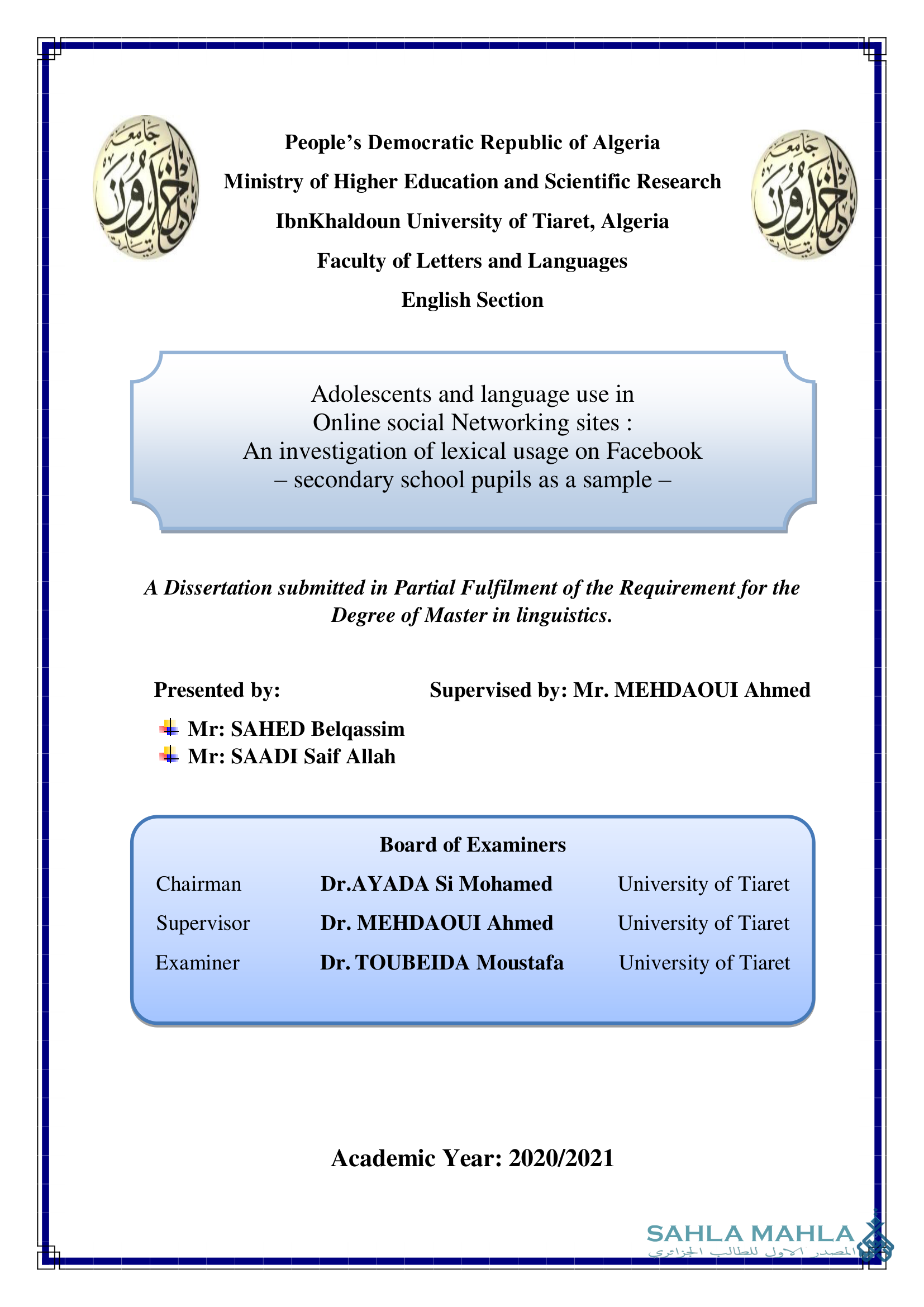
Adolescents and language use in Online social Networking sites : An investigation of lexical usage on Facebook – secondary school pupils as a sample
General Information:
Level |
Master |
Title |
Adolescents and language use in Online social Networking sites : An investigation of lexical usage on Facebook – secondary school pupils as a sample |
Specialty |
linguistics |
Cover Page:
Outline:
General Introduction
CHAPTER ONE: Language Variation and Change
1. Introduction
2. Sociolinguistics as a Field Study
3. Language Variation
3.1. Regional and Social Variation
3.2. Regional Variation
3.3. Social Variation
4.1. Language change and development
4.1.1. External language change history
4.1.2. Internal Language Change History
4.1.3. Temporary and Permanent Change
5. Types of language change
5.1. Lexical and Semantic Change
5.2. Syntax Change (Grammar)
5.3. Phonological Change (SOUND)
5.4. Spelling Change
6. Factors shaping language variation and change
6.1. Political Factor
6.2. Social Factor
1.6.3. Foreign Influence Factor
6.4. Technology Factor
7. The Internet
7.1. The arrival of the Internet
7.2. Internet situations
7.2.1. The electronic mail
7.2.2. Instant messaging
7.2.3. Blogs
7.2.4. Social Media
8. The Iinfluence Of Social Media
9. Social platforms
Chapter two: Language of the social media
9.1. Facebook
9.2. Twitter
9.3. Instagram
10. Conclusion
1.Introduction
2.Innovation in vocabulary
3.Words of technology
4.Slang
4.1. Types of slang
4.1.1. Cockney slang
4.1.2.Public House Slang
4.1.3.Workness’ Slang
4.1.4. Trademaen’ Slang
4.1.5.The slang of commerce
4.1.6.Slang in Schools
4.1.7.Society Slang
4.1.8. Internet Slang
5. Abbreviations and Acronyms
5.1. Abbreviations
5.1.1. Clipping Words
5.1.2. Acronyms
5.1.3. Initialism
5.1.4. Blends
5.1.5. Contractions
5.2. Acronyms
6. The importance of social Networking sites in young generation life
6.1. Positive and negative effects of social Networking sites
6.1.1. Advantages of social Networking sites
6.1.2. Disadvantages of social Networking sites
7. The expressiveness of Netspeak
7.1. Creation and evolution
8.8. The hyperlink
8.1. Online hyperlink
8.2. Hyperlink structure
8.3. Types of links and their meaning for the search engine
8.4. The importance of the hyperlink
9. The impact of social media on language use
10. Previous resaerches on social media impact on language use
11. Conclusion
Chapter three: Research methodology
1. Introduction
2. The sample population
3. The research instrument
3.1. Description of questionnaire
3.2. Analysis of participants’ questionnaire
4.Concusion
General Conclusion
List of references
Download The Thesis:
For more
academic sources and references,
including theses and dissertations from Algerian universities,
, visit our main website.