


The Role of Short Stories in Enhancing EFL Pupils Reading Comprehension Case Study of Third Year Secondary School Pupils Baamar Boujemaa
General Information:
Level |
Master |
Title |
The Role of Short Stories in Enhancing EFL Pupils Reading Comprehension Case Study of Third Year Secondary School Pupils Baamar Boujemaa |
Specialty |
Didactics |
Cover Page:
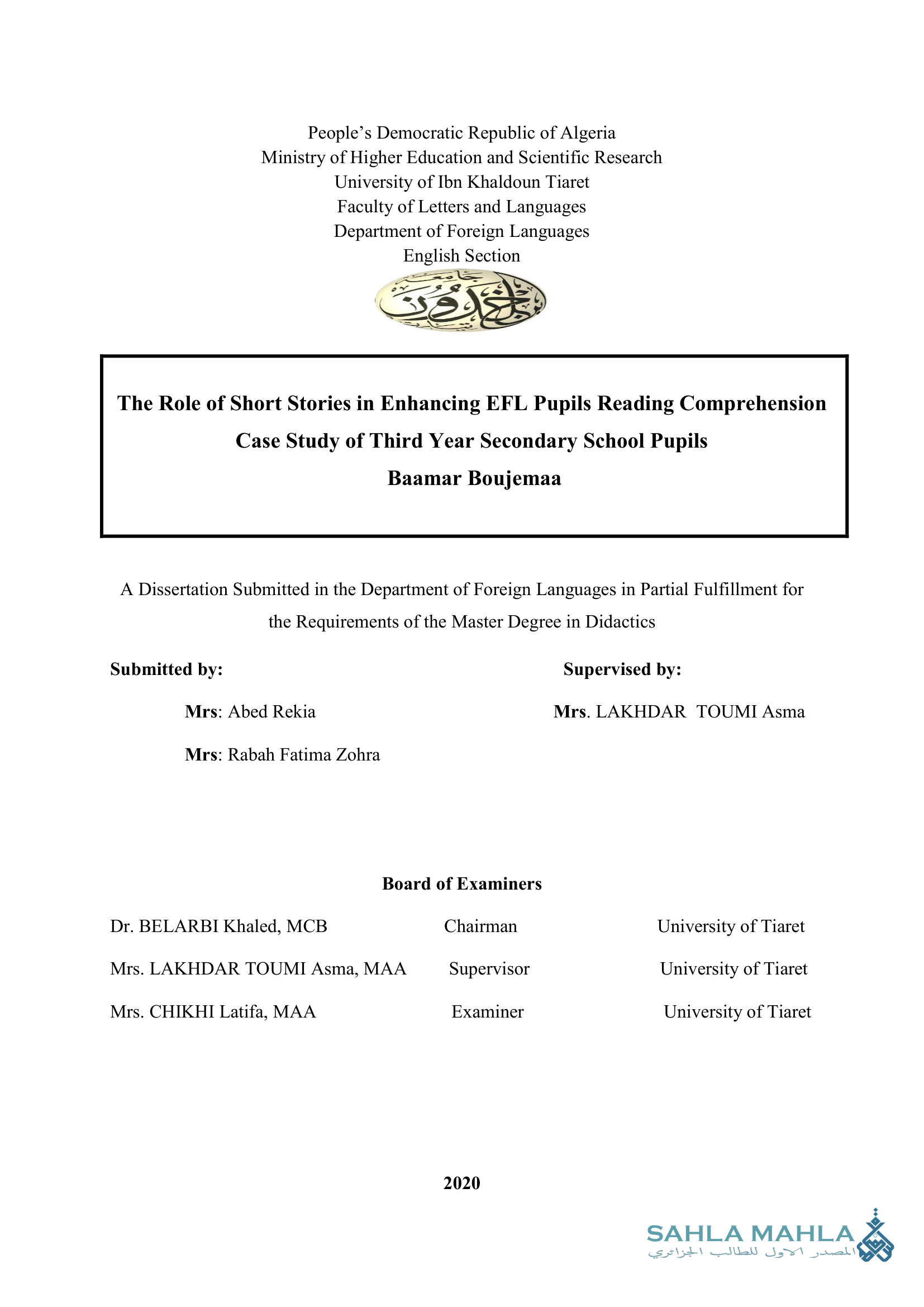
Outline:
Tables of Contents
Chapter One: Reading Comprehension
1.1 Definition of Reading Comprehension
1.2 The Importance of Reading Comprehension
2. The Level of Reading Comprehension
2.1 Literal comprehension
2.2 Interpretive comprehension
2.3 Applied comprehension
2.4Critical comprehension
3. Types of Reading
3.1 Intensive Reading
3.2Extensive Reading
4. Reading Models
4.1 The Bottom-up Model
4.2 The Top-down Model
4.3 The Interactive model
5.Components of Reading
5.1 Reading Fluency
5.2 Comprehension
5.3 Vocabulary
5.4 Phonemic awareness
5.5 Phonics
6. Teaching Reading Comprehension
6.1 Pre-Reading Phase
6.2. While Reading Phase (during)
6.3 Post Reading Phase (after reading)
7. The Principles of Reading
8. Reading in a Second Language
9. Reading Comprehension Difficulties
9.1. Inappropriate Use of Background Knowledge
9.2 Lack of Vocabulary Knowledge
10. The teacher and Learner’s Role in the Reading Classroom
11. Goals of reading
Chapter Two: Short Stories
1.Short stories definition
2. Elements of Short Story
2.1 Setting
2.2 Plot
2.3 Characters
2.4Theme
2.5Conflict
2.6 Point of View
2.7 Style
3. Characteristics of short stories
a) Development of Subject
b) Unity
c) Language
d) Moral
e) Conflict
f) End
g) Brevity or Economy
h) Title
4. Short Story Types
4.1 Anecdote
4.2 Drabble
4.3 Fable
4.4 Frames story
4.5 Fairy tale
4.6 Legend
4.7 Story sequence
4.8 Myth
5. Teachers’ Role in Implementing Short Stories on EFL Classroom
6. Advantages of Teaching Short Stories
6.1 Reinforcements of skills
6.2 Motivating Students
6.3 Teaching Culture
7. Objectives of Teaching Short Stories
8. Criteria of using short stories
9. The Main Reasons for Teaching Short Stories
9.1Cultural Model
9.2.The Language Model
9.3 The Personal Growth Model
10. Benefits of Short Stories in Reading comprehension
Chapter Three: Field Work
1. Population
2. Data Analysis
2.1 Pupils’ Questionnaire
2.1.3 Results Discussion of Pupils’ Questionnaire
2.2. Teachers’ Questionnaire
2.2.1. Description of Teachers’ Questionnaire
2.2.2Analysis of teachers’ questionnaire
2.2.3 Results of Teachers’ Questionnaire
Conclusion
Download The Thesis:
For more
academic sources and references,
including theses and dissertations from Algerian universities,
, visit our main website.