


Investigating EFL Learners’ Attitudes towards Literature Teaching Methods: Case of 2nd Year LMD Students at the University of Tlemcen
General Information:
Level |
Magister |
Title |
Investigating EFL Learners’ Attitudes towards Literature Teaching Methods: Case of 2nd Year LMD Students at the University of Tlemcen |
Specialty |
Didactics of Literature and Civilization Texts |
Cover Page:
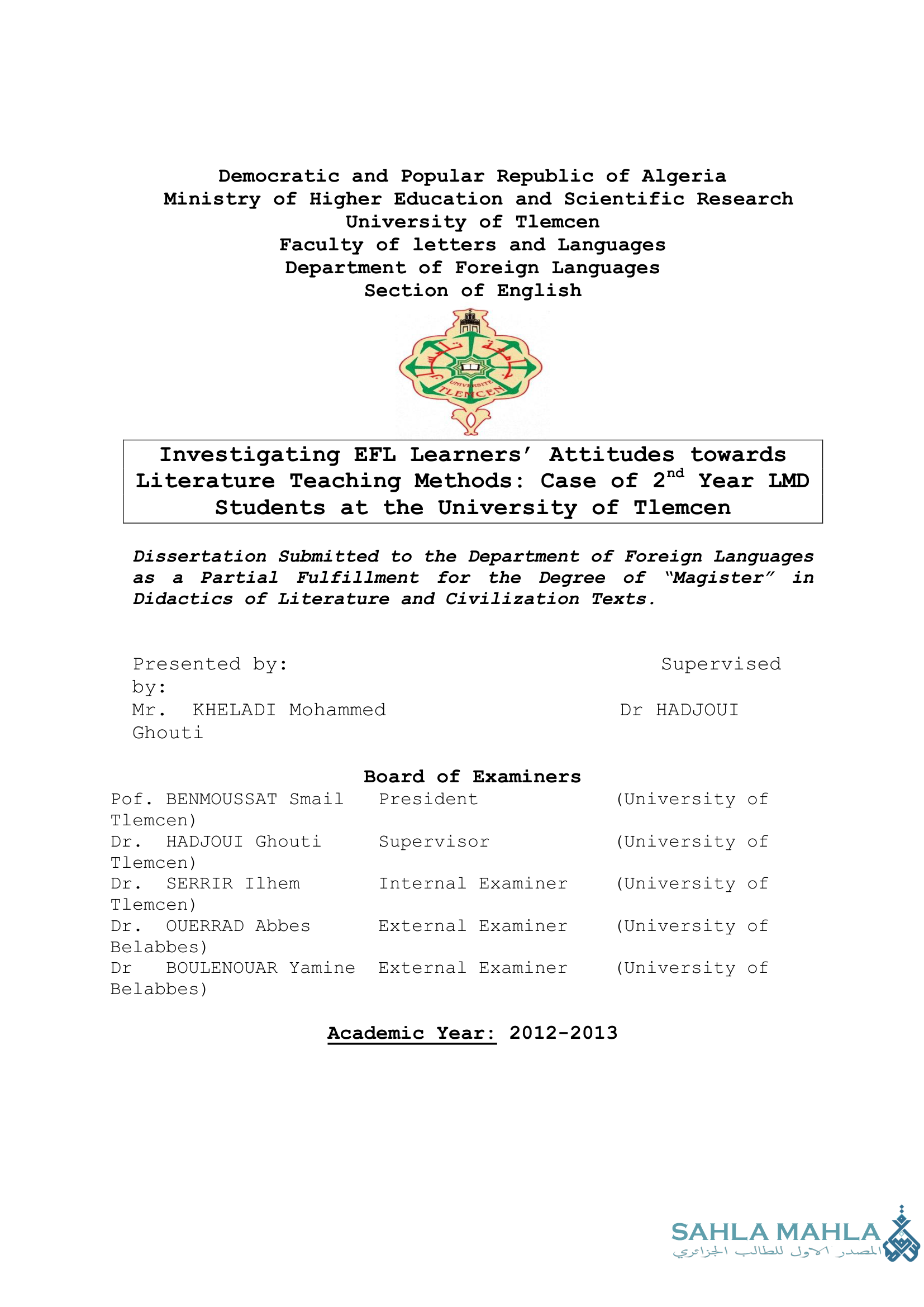
Outline:
Key to Abbreviations and Acronyms
General Introduction
Chapter One: Literature in the EFL Context
1.1. Introduction
1.2. Literature defined
1.2.1. Literature
1.2.2. Literariness
1.3. Literature in the EFL Classroom: the Controversy
1.3.1. The Pros Literature View
1.3.2. The Cons Literature View
1.4. Approaches to Teaching Literature
1.4.1. The Cultural Approach
1.4.2. The language-Based Approach
1.4.3. The Personal Growth Approach
1.4.4. The Integrated Approach
1.5. Theories of Teaching Literature
1.5.1. Subject Centred Theory
1.5.2. Teacher Centred Theory
1.5.3. Students Centred Theory
1.5.4. Eclectic Theory
1.6. Literary Competence
1.6.1. Enhancing EFL Students’ Literary Competence
1.7. Literary Text Selection
1.7.1. Criteria for Text Selection
1.8. Attitude in English Learning and Teaching
1.8.1. Studies on Attitude
1.8.2. Attitude towards EFL Literature
1.8.3. Attitude towards Literature Teaching Methods
1.9. Conclusion
Chapter Two: The Situation of Teaching/Learning Literature
2.1. Introduction
2.2. ELT at University Level
2.3. The LMD System: an Overview
2.3.1. ELT within the LMD
2.4. The Target Department
2.4.1. Literature Teachers
2.4.2. Second Year LMD Students
2.5. The Curriculum
2.6. Literature Syllabus
2.7. Literature Teaching Objectives
2.8. Main Challenges and Constraints
2.9. Conclusion
Notes to Chapter One
Chapter Three: Data Collection & Analysis
3.1. Introduction
3.2. Aims of the Research
3.3. The Participants
3.3.1. Teachers
3.3.2. Students
3.4. Data Collection and Research Instruments
3.4.1. The Questionnaire
3.4.2. The Interview
3.4.3. Classroom Observation
3.5. Data Analysis Methods
3.6. Limitation of the Study
3.7. The Results of the Study
3.7.1. Students’ Questionnaire
3.7.1.1. Discussion of the Questionnaire Results
3.7.2. Teachers’ Interview Results
3.7.2.1. Discussion of the Interview Results
3.7.3. Classroom Observation Results
3.7.3.1. Discussion of Classroom Observation Results
3.8. Discussion of the main findings
3.9. Conclusion
Chapter Four: Recommendations & Practical Suggestions
4.1. Introduction
4.2. Material choice: Towards Familiar Themes
4.3. Process-Oriented Literature Teaching
4.4. Task-Oriented Literature Classroom
4.4.1. Suggested Course Outline
4.5. Exploiting Literature Further
4.5.1. Linguistic Analysis
4.5.2. Summarising the Text
4.5.3. Prediction Activities
4.5.4. Creating Text
4.5.5. Performing a Literary Work
4.6. Cooperative Learning Strategies
4.6.1. Cooperative Learning Vs Traditional Group Learning
4.6.2. Introducing Literature Circles
4.7. Encouraging Reader Response
4.8. Encouraging Students to Read Extensively
4.9. Implementing the Filmed Versions of Literary Works
4.10. Conclusion
General Conclusion
References
Teachers’ Answers Protocols
Download The Thesis:
For more
academic sources and references,
including theses and dissertations from Algerian universities,
, visit our main website.