


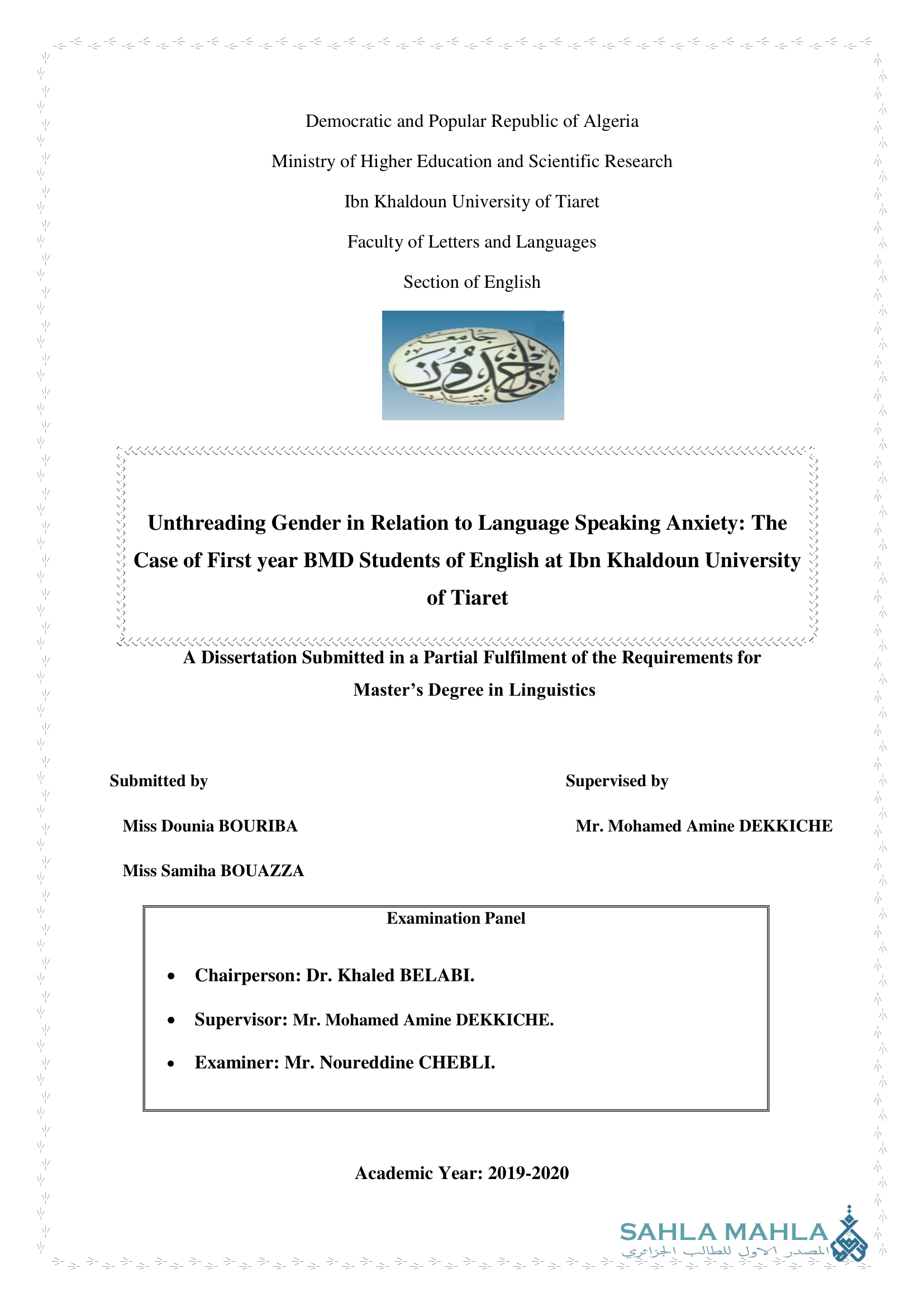
Unthreading Gender in Relation to Language Speaking Anxiety: The Case of First year BMD Students of English at Ibn Khaldoun University of Tiaret
General Information:
Level |
Master |
Title |
Unthreading Gender in Relation to Language Speaking Anxiety: The Case of First year BMD Students of English at Ibn Khaldoun University of Tiaret |
Specialty |
Linguistics |
Cover Page:
Outline:
General Introduction
CHAPTER ONE: Language and Gender Differences
Introduction
1. Previous Studies of Gender-Linked Language Differences
2. Sex, Gender and Sexuality
2.1. Sex
2.2. Gender
2.3. Sexuality
3. Language and Gender Stereotypes
3.1. Common Gender Stereotypes of Women
3.2. Common Gender Stereotypes of Men
4. Sexism in Language
4.1. Sexism in the English Language
4.2. Overt Sexism and Indirect Sexism in Language
4.3. Sexism in the Words of the English Language
5. Linguistic Gender Theories
5.1.The Deficit Theory
5.1.1. Lakoff’s Model
5.1.1.1. Talking Like a Lady “Women’s Speech”
5.1.1.2. Talking about Women “Speech about Women”
5.2. The Dominance Theory “the Two Cultures Theory”
5.3. The Difference Theory
Conclusion
CHAPTER TWO: The Influence of Anxiety on the Speaking Skill of Female and Male Students
Introduction
Section One: The Pressing Issue of Anxiety
1. Anxiety
1.1. Anxiety, Stress, and Depression
1.1.1. Anxiety and Stress
1.1.2. Anxiety and Depression
1.2. Causes of Anxiety
1.2.1. Environmental Factors
1.2.2. Genetics
1.2.3. Medical Factors
1.2.4. Psychological Factors
1.2.5. Illicit Substance Use or Withdrawal
1.3. Types of Anxiety
1.3.1. Generalised Anxiety Disorder (GAD)
1.3.2. Panic Disorder
1.3.2.1. Anxiety Attack and Panic Attack
1.3.2.2. The Different Symptoms of Anxiety Attacks and Panic Attacks
1.3.3. Obsessive-Compulsive Disorder (OCD)
1.3.4. Phobias
Section Two: The Impact of Anxiety of the Speaking Skill of Female and Males Students
1. The Speaking Skill
2.1. The Speaking Skill and Students’ Gender
2. Glossophobia
2.1. Students and Glossophobia
2.2. Students and the Consequences of Glossophobia
2.3. Students’ Gender and Glossophobia
Conclusion
CHAPTER THREE: Data Collection, Analysis and Interpretation
Introduction
1. Methodology
1.1. Research Design
1.2. The Target Population
1.3. Sampling
1.4. Procedures of Data Collection
Section One: Students’ Questionnaire
1. Respondents’ Personal Information
2. Students and their Oral Performance in Class
3. The Effect of Language Speaking Anxiety
Section Two: Teachers’ Questionnaire
1. Respondents’ Personal Information
2. Students and their Oral Performance in Class
3. The Effect of Language Speaking Anxiety on Students
Conclusion
General Conclusion
Bibliography
Appendeces
Download The Thesis:
For more
academic sources and references,
including theses and dissertations from Algerian universities,
, visit our main website.