


The Effectiveness Of Literary texts In EFL Classroom – Case of Master 1 Students Literature and Civilization at Tlemcen University.
General Information:
Master |
Level |
The Effectiveness Of Literary texts In EFL Classroom – Case of Master 1 Students Literature and Civilization at Tlemcen University. |
Title |
Didactics and Assessment In Language Education |
Specialty |
Cover Page:
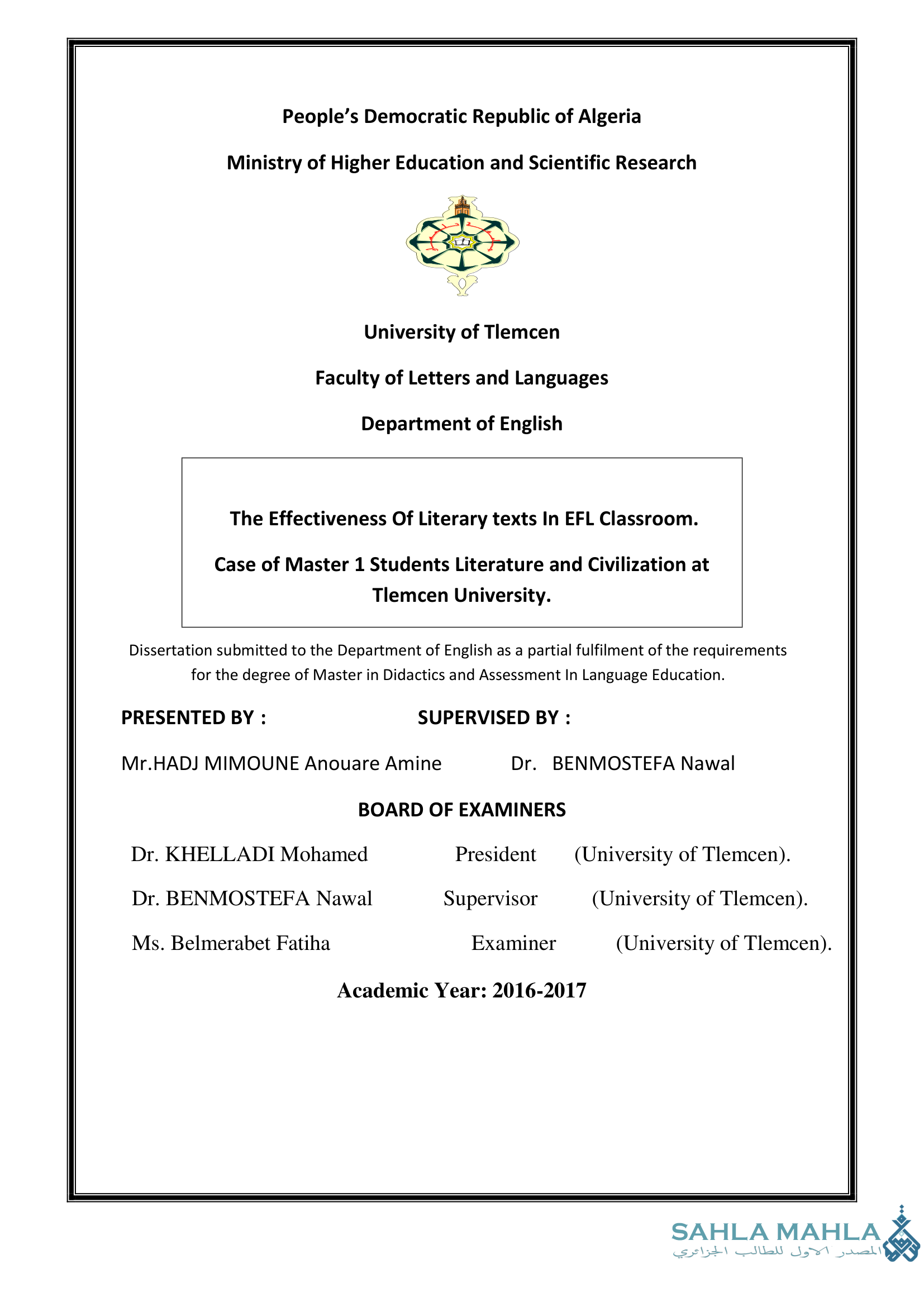
Outline:
Lists of Pie Charts
The General Introduction
Chapter One: The Role of Literary Texts in EFL Classroom.
1.1. Introduction
1.2. Literary Texts Defined
1.3An Assessment of Literature in EFL context
1.4. The Importance of literature in EFL Classrooms
1.4.1. Language Enrichment
1.4.2. Cultural Enrichment
1.4.3. Authentic Materials
1.4.4. Personal Involvement
1.5. Literary Work and Teaching Language
1.5.1. Literary Work and Writing
1.5.2. Literary Work and Writing
1.5.3. Literary Work and Speaking/Listening
1.5.4. Advantages of Teaching Different Genres of Literature
1.5.4.1. Use of Poetry in Language Teaching
1.5.4.2. Use of Short Story in Language Teaching
1.5.4.3. Use of Drama in Teaching Language
1.5.4.4. Use of Novel in Teaching Language
1.6. The requirements of An Effective Teaching of Literary Genres
1.7. Teaching and Learning Situation of Literary Genres
1.7.1. The approaches to teaching literature
1.7.1.1The Cultural Approach
1.7.1.2The Language-Based Approach
1.7.1.3 The Personal Growth Approach
1.7.1.4The Integrated Approach
(1)Linguistic reasons
(2)Methodological reasons
(3)Motivational reasons
1.7.2 Theories of Teaching Literature
1.7.2.1Subject Centred Theory
1.7.2.2 Teacher Centred Theory
1.7.2.3 Student Centred Theory
1.7.2.4The eclectic theory
1.8.1. Literary Text Selection
1.8. The importance of a good and relevant selection of literary text
1.8.2. Parameters for Text Selection
1.8.3. Difficulties and Remedies in using Literary Text
1.8.3.1 Difficulties
1.8.3.2Remedies
1.9. Conclusion
Chapter Two: Data Collection, analysis and implications
2.1. Introduction
2.2. The Aim of the research
2.3. The Participants
2.3.1. The Teachers
2.3.2. The students
2.4. Data Collection and Research Instruments
2.4.1. The Questionnaire
2.4.2. The Interviews
2.5. Data Analysis Methods
2.6. Limitation of the Study
2.7. The Results of the study
2.7.1. The Students’ Questionnaire
2.7.1.1. The discussion of the Questionnaire Results
2.7.2. Teachers’ Interviews Results
2.7.2.1. The Discussion of the Interview Results
2.8. The Discussion of Main Findings
2.9. Suggestions and Recommendations
2.9.1. Use of the films and movies of the literary texts
2.10. Conclusion
General Conclusion
References
Download The Thesis:
For more
academic sources and references,
including theses and dissertations from Algerian universities,
, visit our main website.