


Isolation and characterization of bacteria and fungi with the ability to degrade petroleum hydrocarbons
General Information:
Master |
Level |
Isolation and characterization of bacteria and fungi with the ability to degrade petroleum hydrocarbons |
Title |
Cell and Molecular Biology |
Specialty |
Cover Page:
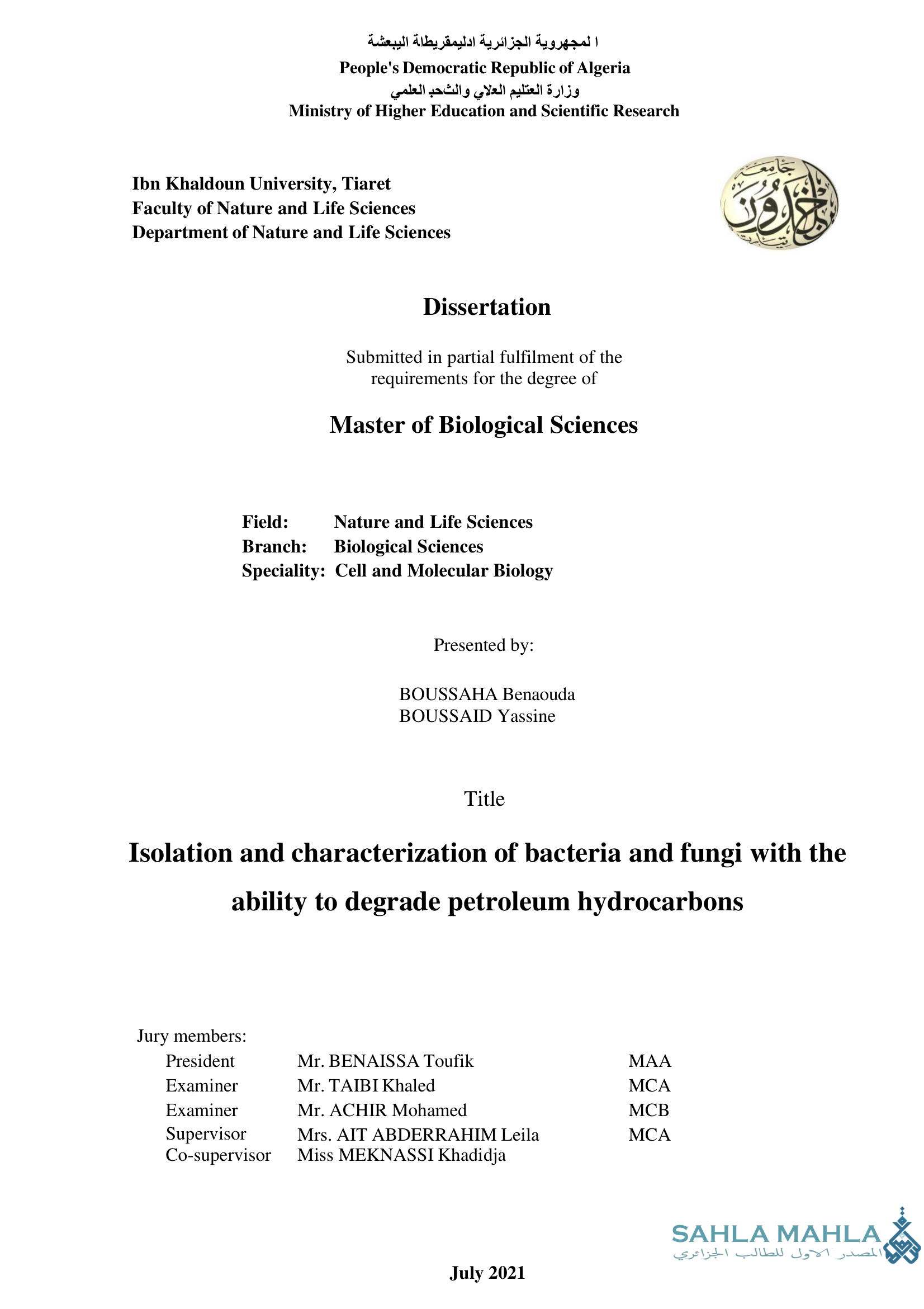
Outline:
Introduction I. Literature review 1 Crude oil or petroleum 1.1 Definition and composition. 1.2 Toxicity 1.3 Impact of the pollution on the environment 1.4 Remediation of petroleum hydrocarbons. 1.5 Hydrocarbonoclastic microorganisms. 1.5.1. Biosurfactant 1.5.2. Biofilm 1.5.3. Cell immobilization. 1.5.4. Genetically modified bacteria 1.6. Mechanism of petroleum hydrocarbon degradation. 1.6.1. Factors influencing petroleum hydrocarbon degradation. II. Methodology 1 Objectives. 2 Materials and Methods 2.1 Materials. 2.1.1 Soil sample. 2.1.2 Petroleum samples. 2.1.3 Diesel and gasoline samples. 2.1.4 Chemical and culture media. 2.2 Methods. 2.2.1. Enrichment, purification and isolation of hydrocarbon degrading bacteria 2.2.2. Growth of microorganisms on diesel and gasoline as carbon and energy source 2.2.3. Screening of biosurfactant producing isolates 2.2.3.1. Emulsification index (E24%). 2.2.3.2. Cell surface hydrophobicity percentage (CSH%). 2.2.3.3. The qualitative drop collapse technique (DCT) III. Results 1 Isolated microorganism. 2 Growth of microorganisms on diesel and gasoline as carbon and energy source. 3 Emulsification index (E24%). 4 Cell surface hydrophobicity percentage (CSH%) of microbial isolates. 5 Drop collapse technique (DCT). 5 Discussion. 6 Conclusion and perspective. 7 References
Download The Thesis:
For more academic sources and references, including theses and dissertations from Algerian universities, , visit our main website.